

You know your birth month. What you probably don't know is what your birthstone actually looks like in real jewelry, what it's traditionally supposed to represent, or whether it's even the gemstone you'd choose if nobody assigned it to you.
That gap is where most birthstone articles stop being useful. They'll tell you September is sapphire and move on. They won't tell you that sapphire comes in more than blue, that the same stone looks noticeably different in yellow gold versus white gold, or that some months come with two or three legitimate options instead of one.
This guide covers all of it: the traditional birthstone for every month, what each one looks like and represents, and more importantly, how to translate that information into a jewelry decision you'll actually be happy with. Because knowing your birthstone and knowing which version of it belongs in your jewelry box are two different questions.
Birthstones by Month at a Glance
Take a look at the birthstone chart and its characteristics before you get it for your jewelry for a promise, engagement, wedding, anniversary, graduation, proposal, etc:
|
Month |
Birthstone(s) |
Typical Color |
Traditional Associations |
Jewelry Personality |
|
January |
Garnet |
Deep red (also green, orange, purple) |
Friendship, protection, trust |
Rich, classic, warm |
|
February |
Amethyst |
Purple |
Clarity, peace, wisdom |
Romantic, artistic, distinctive |
|
March |
Aquamarine/Bloodstone |
Pale blue/dark green with red flecks |
Courage, serenity, renewal |
Fresh, understated, versatile |
|
April |
Diamond |
Colorless/white |
Strength, purity, everlasting love |
Classic, refined, universally wearable |
|
May |
Emerald |
Green |
Growth, renewal, wisdom |
Luxurious, saturated, statement-making |
|
June |
Pearl / Alexandrite / Moonstone |
White / color-changing / blue-white sheen |
Purity, balance, intuition |
Soft, mysterious, or subtly glowing depending on choice |
|
July |
Ruby |
Red |
Passion, courage, vitality |
Bold, romantic, confident |
|
August |
Peridot / Spinel / Sardonyx |
Lime green / varied/banded red-brown |
Strength, protection, harmony |
Fresh, versatile, or grounded |
|
September |
Sapphire |
Usually blue, also pink, yellow, white |
Wisdom, loyalty, sincerity |
Sophisticated, versatile, timeless |
|
October |
Opal / Tourmaline |
Play-of-color / wide color range |
Hope, creativity, balance |
Distinctive, colorful, individual |
|
November |
Topaz / Citrine |
Golden brown/golden yellow |
Strength, warmth, healing (in lore) |
Warm, approachable, everyday-friendly |
|
December |
Tanzanite / Turquoise / Zircon |
Blue-violet/sky blue/various |
Prosperity, protection, calm |
Modern, bohemian, or elegant depending on choice |
Where a month lists more than one recognized stone, all are legitimate. The American Gem Society and Jewelers of America both acknowledge multiple options for several months. Also, the Gemological Institute of America mentions the birthstones.
Before You Choose a Birthstone, Know What the Month Actually Tells You
A birth month tells you which gemstone tradition assigned to that period of the calendar. It doesn't tell you anything about your taste, your existing jewelry, or what you'll actually reach for on a Tuesday morning. Those are separate decisions, and treating them as one is where many birthstone jewelry purchases go wrong.

The modern U.S. birthstone list traces back to 1912, when the American National Retail Jewelers Association, now Jewelers of America, standardized a single list for the American market. Before that, birthstone traditions varied by country and by century, often tied to older European or biblical sources. That history is worth knowing because it explains why you'll sometimes see two different birthstones listed for the same month: a "traditional" stone from older custom and a "modern" one from the 1912 standardization (with later additions in subsequent decades). Neither version is wrong. They're just different reference points.
What matters for a jewelry decision is this: your birth month is the starting fact. Everything after that color, shape, metal, format is a personal choice layered on top of it.
1. January: Garnet Brings a Deep, Winter-Ready Red
January's traditional birthstone is garnet, a deep wine-red gemstone traditionally linked to friendship and protection, and prized in jewelry for its warm, classic color and reliable durability.

-
Color and Appearance
Garnet is most recognized in a deep wine-red, though the garnet family also includes green, orange, and purple varieties. The name comes from the Latin word for "seed," a reference to garnet's resemblance to pomegranate seeds. Visually, it reads as warm and substantial, closer to a deep burgundy than a bright red, with a rich, slightly transparent depth when cut and polished.
-
Meaning and Symbolism
In gemstone lore, garnet has long been associated with friendship, protection, and safe travel, associations rooted in centuries of folklore rather than scientific evidence.
-
Jewelry Personality
Garnet gives a piece a classic, almost vintage character. It reads as rich and grounded rather than flashy, which makes it a good fit for someone who wants color without a loud statement.
-
Best Jewelry Formats
Garnet works well as a ring center stone, in drop earrings, or as an accent alongside diamonds. Its deep tone also holds up well in pendant settings, where it catches light without needing a large carat size.
-
Buying Consideration
Garnet is reasonably durable for regular wear, though like most colored stones it benefits from a protective setting, such as a bezel or halo, if it's going into a ring worn daily.
-
Gift Interpretation
Garnet suits someone who wants color with a grounded, wearable-anywhere quality rather than something flashy: a good option for a recipient who prefers understated, classic pieces over statement jewelry.
2. February: Amethyst Is the Purple Birthstone With a Quiet-Luxury Look
Amethyst, a purple variety of quartz, is February's birthstone. It’s traditionally linked to clarity and calm, and valued in jewelry for a color that's genuinely uncommon among mainstream gemstones.

-
Color and Appearance
Amethyst's color ranges from pale lilac to deep violet. It tends to look richer and more saturated in larger carat sizes, and its clarity is typically high. So, getting a clean, glassy sparkle when well cut is the advantage here.
-
Meaning and Symbolism
Historically, amethyst has been associated with clarity, calm, and wisdom. These are traditional symbolism rather than a documented physical effect.
-
Jewelry Personality
Amethyst reads as romantic and artistic. Because purple is uncommon among mainstream gemstones, it comes across as more individual and distinctive than red or blue stones.
-
Best Jewelry Formats
It suits rings, Pisces zodiac pendants, and statement earrings equally well, and photographs well against both yellow and white gold.
-
Buying Consideration
As quartz, amethyst is reasonably hard but can be more easily scratched or chipped than sapphire or ruby, so it's a better fit for occasional-to-regular wear than for a ring worn daily in physically demanding conditions.
-
Gift Interpretation
Amethyst suits a recipient who likes color that feels distinctive rather than expected. It’s a good choice for someone who wants to stand out from the usual red-and-blue birthstone palette.
3. March: Aquamarine or Bloodstone? Two Very Different March Choices
March is unusual in that its two recognized birthstones look almost nothing alike: aquamarine, a pale ocean-blue, and bloodstone, a dark green stone flecked with red.

-
Color and Appearance
Aquamarine is a pale, clear blue reminiscent of shallow ocean water, usually with high transparency. Bloodstone is a dark green chalcedony flecked with red inclusions, giving it an opaque, mottled appearance that's visually the opposite of aquamarine.
-
Meaning and Symbolism
Aquamarine is traditionally linked to courage and calm. Bloodstone is associated historically with strength and vitality, and these both associations rooted in tradition rather than scientific evidence.
-
Jewelry Personality
Aquamarine feels light, cool, and easy to wear with everything, with a soft, almost pastel presence. Bloodstone has more visual weight and a more unusual, earthy character.
-
Best Jewelry Formats
Aquamarine works well in rings, pendants, and both delicate and larger settings. Bloodstone tends to appear more often in cabochon-style rings, signet rings, and men's jewelry.
-
Buying Consideration
Aquamarine is popular for engagement-adjacent and everyday rings because of its clarity and durability. Bloodstone is less commonly used in fine jewelry today, which can make matching settings or replacement stones harder to source.
-
Gift Interpretation
Choose aquamarine for a recipient who wants something universally wearable and calm; choose bloodstone for someone with a more distinctive, unconventional taste who wants a stone with visual texture.
4. April: Diamond Gives April a Classic Advantage
April's birthstone is diamond: the only birthstone that's also the default choice for white gold engagement rings under $1,000, which gives April babies a built-in advantage if they want jewelry that doubles as a lifetime piece.

-
Color and Appearance
When buying a diamonds there are colorless to near-colorless in its most classic form, prized for brilliance and sparkle rather than body color. Fancy-color diamonds also exist in yellow, pink, and other hues, though these are a separate category from the traditional colorless stone.
-
Meaning and Symbolism
Diamond has long been linked to strength and enduring love, a tradition reinforced by its role in engagement jewelry rather than a proven physical property.
-
Jewelry Personality
Diamond is the most classic and universally wearable birthstone. It suits nearly any design, from minimalist to elaborate, and pairs cleanly with any metal tone.
-
Best Jewelry Formats
Rings are the most common format, especially elongated emerald-cut engagement rings. But this April birthstone, a diamond also performs well in earrings, pendants, and as accent stones in rings surrounding a colored center gem.
-
Buying Consideration
Diamond is the hardest natural gemstone, making it the most durable birthstone option for daily wear. One distinction worth understanding: diamond is the birthstone for April specifically. In other months, diamonds often appear as accent stones surrounding a colored birthstone rather than as the birthstone itself. For example, a small diamond halo around a ruby doesn't make diamond July's stone; it's a design choice that adds sparkle and definition.
Buyers should also know that natural and laboratory-created diamonds are chemically and visually identical, but the difference is origin, not gemstone identity. It typically affects price rather than appearance.
Know that the VVS diamond clarity is prominent, which provides an affordable and sparkling effect. Also, the 4Cs grades, including color, clarity, carat weight, and cut, matter to judge the price and overall look.
-
Gift Interpretation
Diamond suits a recipient who wants a piece with lasting versatility in jewelry that will still feel appropriate years from now regardless of changing style trends.
5. May: Emerald Is the Birthstone for a Rich Green Statement
Emerald, a green variety of beryl, is May's birthstone, one of the more visually assertive options on the birthstone chart, and traditionally associated with renewal and growth.

-
Color and Appearance
Emerald's color ranges from a lighter yellow-green to a deep, saturated forest green. It typically contains natural inclusions (sometimes called "jardin," French for garden), which are considered part of the stone's character rather than a defect.
-
Meaning and Symbolism
Emerald has traditionally been associated with renewal, growth, and wisdom, associations drawn from centuries of gemstone lore rather than scientific claims.
-
Jewelry Personality
A good emerald reads as luxurious and intentional rather than casual, which makes it a strong choice for someone who wants a piece that feels special rather than everyday.
-
Best Jewelry Formats
Emerald photographs beautifully in rings, pendants, and earrings. It looks striking against both yellow gold, which enhances its warmth, and white gold, which sharpens the contrast.
-
Buying Consideration
Emerald's natural inclusions can make it more prone to chipping than diamond or sapphire, so a protective setting, such as a bezel or halo. This May birthstone is a practical consideration for anyone planning to wear an emerald ring daily.
-
Gift Interpretation
Emerald birthstone suits a recipient who appreciates bold, saturated color and doesn't mind a gemstone that asks for slightly more care than a harder stone would.
6. June: Pearl, Alexandrite or Moonstone? June Gives You Options
June is the birthstone system's most flexible month, with three recognized options: pearl, alexandrite, and moonstone, that couldn't be more different from one another.

-
Color and Appearance
Pearl is typically white or cream with a soft luster rather than sparkle. Alexandrite is a genuinely rare color-changing gemstone that shifts from green in daylight to red-purple under incandescent light. Moonstone has a distinctive glow, called adularescence, that gives it a soft blue-white sheen as it moves.
-
Meaning and Symbolism
Pearl is traditionally associated with purity and elegance. Moonstone has long been linked to intuition and balance, and alexandrite, given its rarity, has historically been associated with good fortune. All traditional associations rather than proven effects.
-
Jewelry Personality
Pearl suits someone who wants timeless and understated. Alexandrite suits someone drawn to rarity and visual surprise. Moonstone suits someone who prefers a softer, more ethereal look. This range exists because June's birthstone list was expanded over the twentieth century rather than fixed once, and jewelers kept all three rather than choosing one.
-
Best Jewelry Formats
Pearl is classic in strands, studs, and pendants. Alexandrite and moonstone both work well as ring center stones or in earrings, where their light-reactive qualities are easiest to notice.
-
Buying Consideration
Pearl requires more care than the other two: it's softer and more prone to surface damage, so it's better suited to occasional wear or protective settings than to a ring worn every day. Alexandrite is rare and can carry a higher price at larger sizes.
-
Gift Interpretation
Pearl suits a recipient with classic taste, alexandrite suits someone who'd appreciate owning something genuinely rare, and moonstone suits someone drawn to soft, understated, slightly mysterious jewelry.
7. July: Ruby Turns a Birthday Gift Into a Color Statement
July's ruby is one of the easiest birthstones to recognize in jewelry: a saturated, unmistakable red that reads as bold rather than subtle, and one of the more durable colored gemstones available in the birthstone chart.

-
Color and Appearance
Ruby's defining trait is a saturated, deep red, though tone and intensity vary. It is the most prized stones show a vivid, slightly bluish-red, often called "pigeon blood" red in the trade. It has strong brilliance when well cut.
-
Meaning and Symbolism
Ruby has long been associated with passion, courage, and vitality in gemstone lore, traditional symbolism rather than a scientifically documented effect.
-
Jewelry Personality
Ruby reads as bold, romantic, and confident. It remains one of the most requested colored gemstones for both birthstone jewelry and statement rings.
-
Best Jewelry Formats
Ruby works well as a ring center stone, in halo settings, and as accent stones. Because it's a variety of corundum, the same mineral family as sapphire, it's also durable enough for earrings and bracelets that see regular wear. Choose the bracelet’s stone shape, like round, emerald, or radiant, according to your choice.
-
Buying Consideration
Ruby's durability makes it a realistic option for a ring worn regularly, not just for special occasions. As with any colored gemstone, color saturation affects value more than size alone.
-
Gift Interpretation
If the person you're shopping for prefers color over a conventional diamond-only look, a ruby piece can feel far more personal than a generic birthday gift. Zemerra's International Five Stone Oval Cut Ruby Halo Fashion Ring illustrates the point well: five oval-cut rubies are set in a halo of 40 round brilliant diamonds (0.24 CTW total), available in 10K, 14K, or 18K gold in yellow, white, or rose finishes.
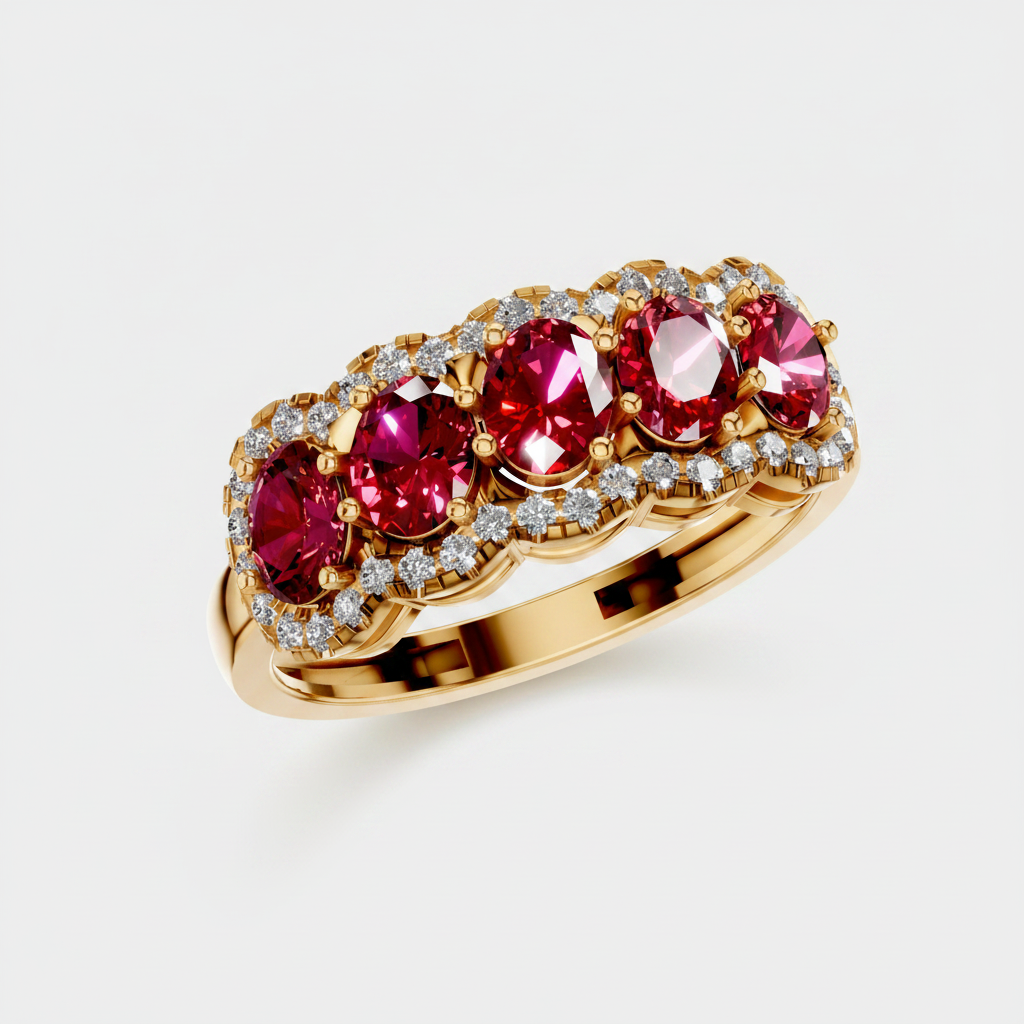
In this birthstone ring, the multi-stone layout spreads the red across the hand rather than concentrating it in a single large stone, which gives the ring a fuller, more textured look than a solitaire. This keeps the color unmistakably the focal point, and it's IGI-certified and currently listed at around $210. Especially for an oval diamond engagement ring price, you have to go for the range of $800 to $5,500 for lab-grown diamond, and natural diamond cost also higher.
8. August: Peridot, Spinel or Sardonyx - Which One Fits?
August has three recognized birthstones with distinct personalities: peridot, spinel, and sardonyx.

-
Color and Appearance
Peridot is a bright lime-green gem, one of the few gemstones that occurs naturally in only one color family. Spinel comes in a much wider color range, including red, pink, blue, and purple. Sardonyx is a banded stone combining reddish-brown sard and white onyx layers, giving it a more graphic, structured look than the other two.
-
Meaning and Symbolism
Peridot is traditionally linked to strength and protection. Spinel was historically confused with ruby and sapphire before gemologists could reliably distinguish them, and it carries similar symbolic associations with vitality by extension. These are traditional associations, not scientific claims.
-
Jewelry Personality
Peridot feels fresh and versatile. Spinel feels closer to ruby or sapphire in saturation but with more color flexibility. Sardonyx feels grounded and structured, closer to a vintage or masculine aesthetic.
-
Best Jewelry Formats
Peridot and spinel both suit rings, pendants, and earrings. Sardonyx appears more frequently in cabochons, signet rings, and cufflinks than in mainstream fine jewelry.
-
Buying Consideration
Peridot suits someone who wants a fresh, unusual color that isn't commonly seen in mainstream jewelry. Spinel often offers better value than ruby or sapphire at comparable color and size. Sardonyx is less commonly found in fine jewelry, which can limit selection.
-
Gift Interpretation
Choose peridot for bright, unconventional color; spinel for ruby- or sapphire-like saturation at a different price point; sardonyx for a more vintage, structured aesthetic.
9. September: Sapphire Is More Than a Blue Gemstone
September's birthstone, sapphire, is traditionally recognized in a rich blue, and one of the most practical birthstones in jewelry thanks to a rare combination of color and durability.

-
Color and Appearance
Sapphire is most commonly recognized in a rich blue, though it also occurs naturally in pink, yellow, white, and other colors. Blue is simply the color most associated with the name. Blue sapphires range from a light cornflower tone to a deep, near-navy blue.
-
Meaning and Symbolism
Sapphire is traditionally linked to wisdom, loyalty, and sincerity, and this symbolism is drawn from centuries of use in royal and religious jewelry rather than documented scientific effects.
-
Jewelry Personality
Sapphire reads as sophisticated, versatile, and timeless. It suits both classic and modern designs equally well, which is part of why it remains such a popular choice. We included sapphire jewelry in Summery Jewelry trends for 2026 as a personalized gift.
-
Best Jewelry Formats
Sapphire is a strong fit for rings, especially pear-shaped engagement rings and everyday styles, as well as pendants, earrings, and bracelets that see regular wear.
-
Buying Consideration
As a variety of corundum, sapphire is extremely durable, ranking just below diamond in hardness. That combination of color and toughness is a large part of why sapphire is one of the most popular non-diamond choices for engagement and everyday rings alike.
-
Gift Interpretation
If you want September's sapphire to feel more distinctive than a standard round solitaire, the cut and setting do most of the work.
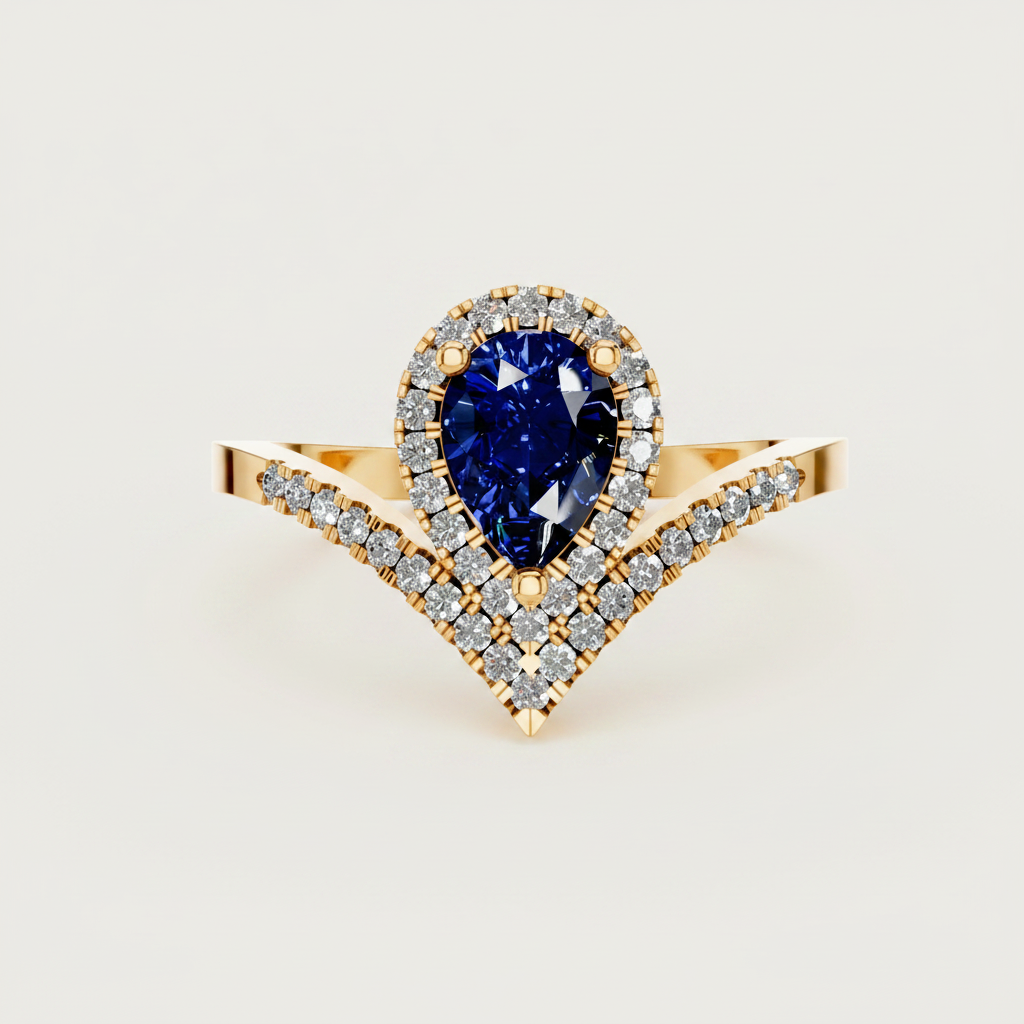
A pear-shaped stone gives the ring a directional, elongated silhouette instead of a symmetrical one. Zemerra's International Pear Cut Halo Sapphire Chevron Gold Ring uses a pear-cut sapphire surrounded by a halo of 39 round brilliant diamonds (0.23 CTW) on a split-shank chevron band, available in 10K, 14K, or 18K gold across yellow, white, and rose finishes. The split shank draws the eye outward from the stone rather than framing it symmetrically, which gives the ring a more sculptural profile than a traditional single-shank halo setting. It's IGI-certified and listed around $210.
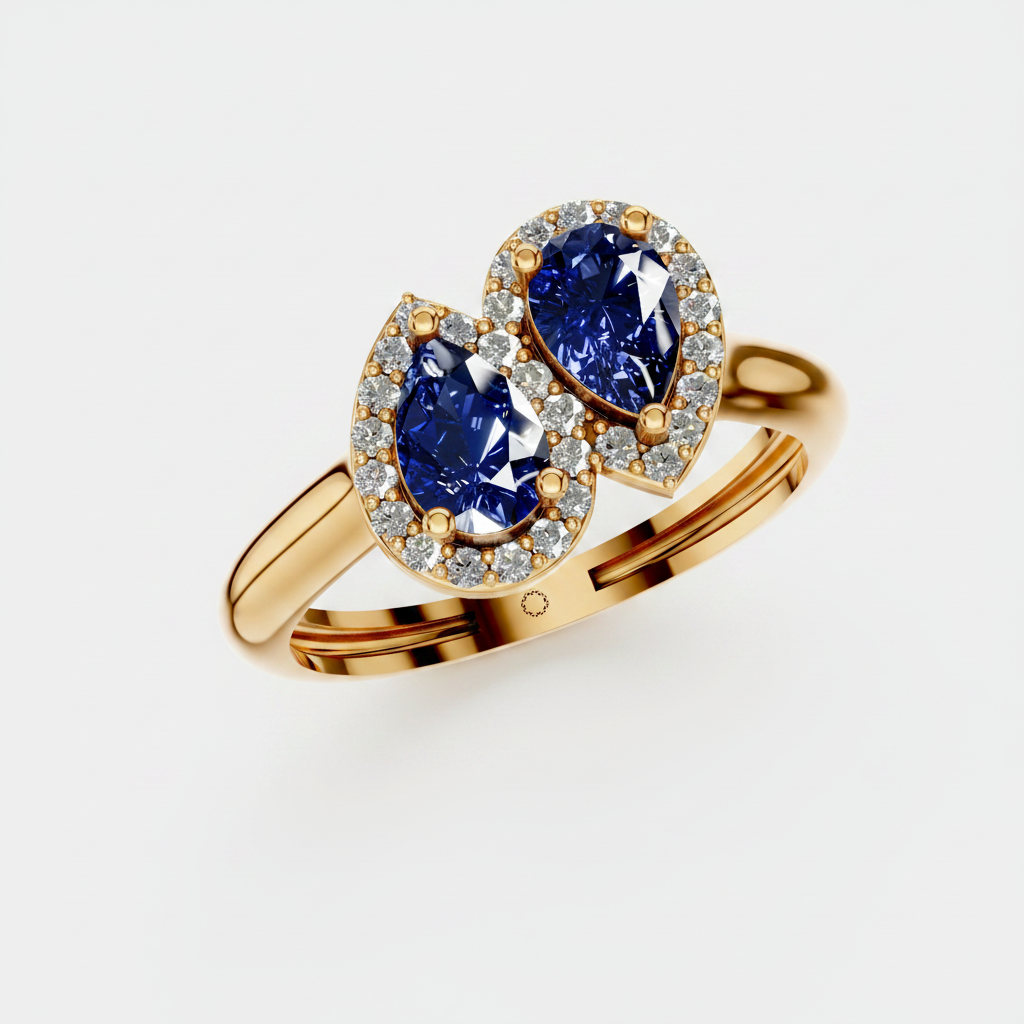
For a buyer who wants something structurally different from a standard halo, a two-stone composition changes the entire visual rhythm of the ring. The Pear Cut Blue Sapphire Halo Toi Et Moi Bypass Ring sets two pear-cut sapphires, each with its own halo, in a bypass composition where the two stone clusters curve past each other rather than sitting side by side. That "toi et moi" (you and me) format has a more personal, narrative quality than a single-stone ring. It’s often chosen to represent two people or two moments rather than a single focal point, and its asymmetry gives it a more contemporary feel than a centered solitaire. It carries 29 round brilliant diamonds (0.18 CTW), is available in the same gold karat and color options, is IGI-certified, and is currently listed around $185.
10. October: Opal or Tourmaline? Choose Based on the Look You Want
October offers two birthstones with almost opposite visual personalities: opal, known for its shifting play-of-color, and tourmaline, known for its unusually wide color range.

-
Color and Appearance
Opal displays play-of-color, which means flashes of multiple colors that shift as the stone moves, set against a white, black, or crystal-clear background. Tourmaline occurs in one of the widest color ranges of any gemstone, including pink, green, blue, and bi-color varieties where a single stone shows two colors at once.
-
Meaning and Symbolism
Opal has long been associated with hope, creativity, and imagination. Tourmaline has been linked in various traditions to balance and calm. Both associations are rooted in folklore rather than scientific evidence.
-
Jewelry Personality
Opal feels distinctive and almost holographic, genuinely unlike any other birthstone. Tourmaline feels colorful and individual, with the added benefit of being matchable to a specific favorite shade.
-
Best Jewelry Formats
Opal is best suited to earrings, pendants, and occasional-wear rings rather than pieces exposed to daily impact. Tourmaline is versatile enough for rings, earrings, and bracelets alike.
-
Buying Consideration
Opal is one of the softer, more delicate gemstones and requires more careful wear and storage than most birthstones. Tourmaline offers considerably more everyday durability.
-
Gift Interpretation
Opal suits someone who wants a genuinely unique effect and doesn't mind treating jewelry more delicately. Tourmaline suits someone who wants strong, saturated color they can wear without extra caution.
11. November: Topaz or Citrine for a Warmer Birthday Look?
November's two recognized birthstones, topaz and citrine, both lean toward warm, golden tones and offer practical, durable options for regular wear.

-
Color and Appearance
Topaz's most classic birthstone color is a golden brown, though it also occurs in blue and other colors created through treatment. Citrine, a variety of quartz, ranges from pale yellow to a deeper amber-orange. Topaz tends to have more clarity and a slightly cooler golden tone, while citrine has a warmer, more amber cast.
-
Meaning and Symbolism
Both stones have traditionally been associated with warmth and positivity in gemstone lore, rather than any documented physical effect.
-
Jewelry Personality
Both read as warm and approachable, well suited to everyday jewelry rather than occasion-only statement pieces.
-
Best Jewelry Formats
Topaz and citrine both work well as ring center stones, in earrings, and as pendants, and both work well set in yellow or rose gold, which reinforces their warm coloring.
-
Buying Consideration
Citrine is generally more affordable than topaz at comparable sizes. Both are practical, durable choices for rings, purity rings worn on the finger regularly, for example.
-
Gift Interpretation
Either suits a recipient who prefers warm tones over cool ones: citrine for a more budget-conscious gift, topaz for a slightly more refined, clearer stone.
12. December: Three Birthstones, Three Completely Different Aesthetics
December closes the year with three recognized birthstones: tanzanite, turquoise, and zircon that span very different styles.

-
Color and Appearance
Tanzanite is a blue-violet gemstone with a distinctive, modern-looking depth of color. Turquoise is an opaque sky-blue to blue-green stone, often with fine veining. Zircon is a naturally occurring, brilliant gemstone, not to be confused with cubic zirconia, a lab-made diamond simulant that most commonly appears in a bright, clear blue.
-
Meaning and Symbolism
Tanzanite is prized largely for its rarity and depth of color. Turquoise has one of the longest histories of any gemstone in human use and has traditionally been linked to protection and calm. These are traditional associations, not scientific claims.
-
Jewelry Personality
Tanzanite feels modern and high-saturation. Turquoise feels bohemian or vintage-inspired. Zircon feels closer to diamond in brilliance but with a distinct blue cast.
-
Best Jewelry Formats
Tanzanite and zircon both suit rings and earrings where their brilliance and color can catch light. Turquoise is especially popular in pendants, bracelets, and mixed-metal designs.
-
Buying Consideration
Tanzanite was discovered relatively recently, in the 1960s, and is found in a single known location, which affects both rarity and long-term availability. Turquoise, being more porous than most gemstones, requires more careful handling around lotions, chemicals, and prolonged water exposure.
-
Gift Interpretation
Tanzanite suits someone drawn to modern, rare, high-saturation color. Turquoise suits a more bohemian or vintage-inspired aesthetic and pairs particularly well with silver or mixed-metal designs. Zircon suits someone who wants sparkle and brilliance closer to diamonds but with a distinct blue cast.
Conclusion: Let the Birth Month Start the Story - Let Personal Style Finish It
Your birth month tells you which gemstone tradition assigned to you. It doesn't tell you the color you'll actually love, the shape that will suit your hand, or the metal that will match the rest of your jewelry. Those decisions are yours, and they matter just as much as the birthstone itself.
The most meaningful birthstone jewelry combines personal meaning, visual appeal, and wearable design, not just the first of the three. Once you know the birthstone, the more interesting question is what version of it feels right for the person wearing it. Explore gemstone rings designed around color, shape, and personal style to find that version.