

Quick answer: The April birthstone is the diamond, which is the hardest natural material on Earth, a symbol of eternal love and clarity, and the official stone for April on every modern birthstone list since 1912.
If you're shopping for someone born in April, or you're an April baby yourself, you already know that buying a diamond is your stone. Know why it earned that spot, what it actually looks like across different qualities, and, increasingly relevant in 2026, whether a natural or lab-grown diamond is the smarter choice for birthstone jewelry. Let's cover all of it.
What Is the April Birthstone?
Diamond is both the modern and traditional birthstone for April. It's made of a single element, carbon, compressed under extreme heat roughly 100 miles below the Earth's surface over one to three billion years. That process is also why diamond ranks a perfect 10 on the Mohs hardness scale, making it the only gem that can scratch another diamond.
Unlike months such as June birthstones or August gemstones, which rotate between two or three stones, April has stayed almost entirely loyal to diamond in modern lists. Some retailers also mention white topaz or clear quartz as budget-friendly April alternatives, which we'll get to below.
The Meaning Behind the April Birthstone
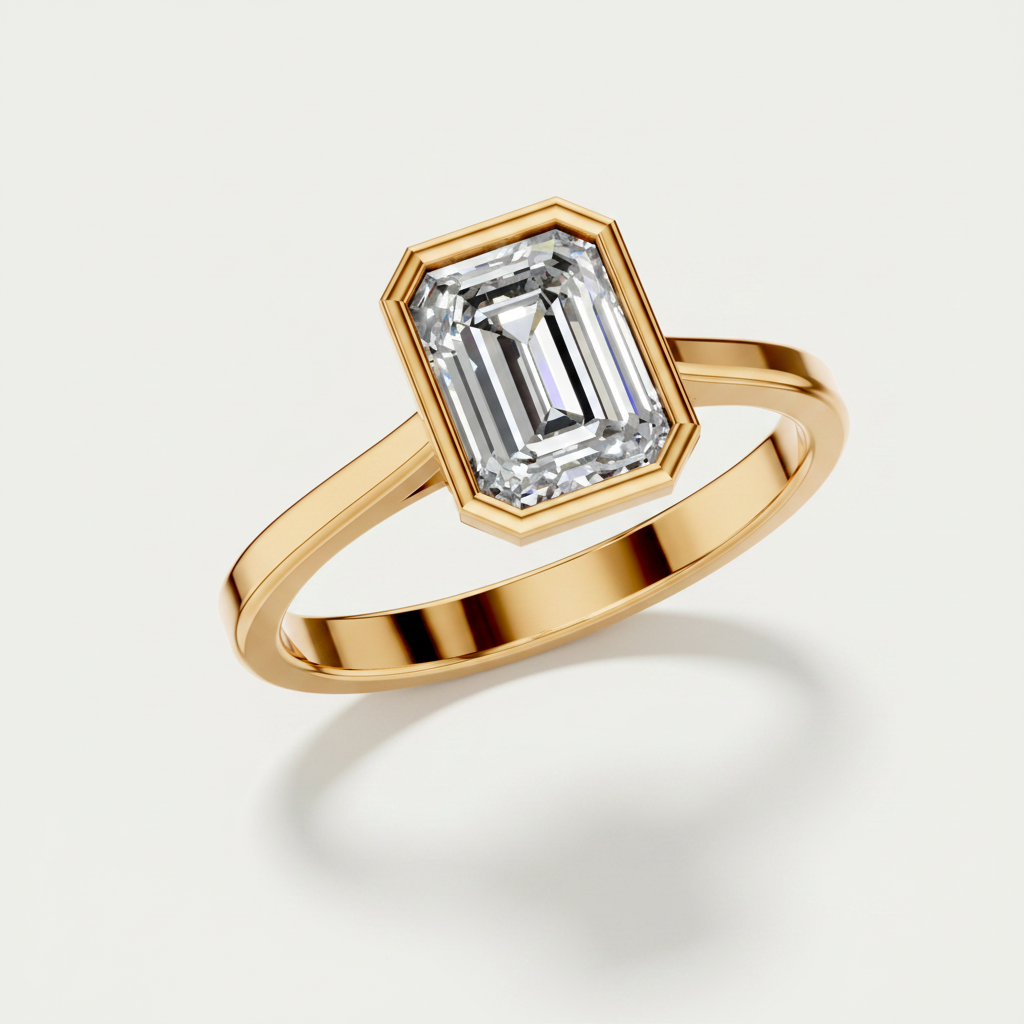
Diamond's symbolism has stayed remarkably consistent across cultures and centuries:
-
Eternal love and commitment, which is the reason diamonds anchor engagement ring traditions.
-
Clarity and truth, two characteristics tied to the stone's transparency and light performance.
-
Strength and resilience, qualities drawn directly from its physical hardness.
-
New beginnings for diamonds' April placement lines up with spring's arrival in the Northern Hemisphere.
The name itself reinforces this: "diamond" comes from the Greek word adamas, meaning unconquerable or invincible — the same root that gives us "adamant." Historically, soldiers' partners sometimes wore diamond pendants as a symbol of protection and remembrance before battle, a tradition that folds neatly into the stone's modern role as a keepsake between people who matter to each other.
History of Diamond as April's Birthstone
-
Ancient Origins in India
Diamonds were first gathered from riverbeds in India as early as the 4th century BCE, long before mining existed. Indian diamonds moved west along trade routes, reaching Venetian markets by the medieval period, where European royalty and merchants began treating them as luxury status symbols rather than curiosities.
-
How Diamond Became Official in 1912
The birthstone list most retailers use today wasn't ancient. It was standardized in 1912 by the American National Retail Jewelers Association (now Jewelers of America). Before that, birthstone-to-month assignments varied by region and era; some Renaissance-era lists actually placed sapphire in April's slot. The 1912 list locked diamond in permanently, and the Gemological Institute of America (GIA) and American Gem Society still recognize it as April's stone today.
-
Folklore and Healing Legends
Long before diamonds were prized purely for beauty, people believed they carried protective power. A 2nd-century poet claimed diamonds warded off the evil eye. Later European folklore held that diamonds could neutralize poison and guard against plague, and some cultures believed sleeping with a diamond drew toxins from the body overnight. None of this is medically accurate, of course, but it shows how much trust people placed in the stone long before modern gemology explained why it sparkles.
What Diamonds Actually Look Like
This is the part most birthstones gloss over, and it's exactly what shoppers need before buying.
-
Colorless vs. Fancy Color Diamonds
About 98% of diamonds sold are near-colorless, ranging from icy white to faint yellow or brown tints. The industry grades this on a D-to-Z scale, where D is completely colorless (and priciest), and Z shows visible warmth. Beyond this range are fancy-color diamonds, naturally occurring pinks, blues, yellows, and greens, which are rare and priced on an entirely separate scale from colorless stones.
-
The 4Cs, Explained Simply
These 4Cs of diamonds are useful to know before shopping for a diamond, the April month gemstone.
|
Factor |
What It Affects |
Buying Tip |
|
Cut |
Sparkle and brilliance |
Prioritize this first — a well-cut diamond hides minor flaws in color or clarity |
|
Color |
Warmth or whiteness |
G–J grades offer near-colorless looks at a lower cost than D–F |
|
Clarity |
Internal/external marks |
VVS to VS1–VS2 clarity looks flawless to the naked eye |
|
Carat |
Size/weight |
Slightly under round numbers (0.9ct vs 1ct) can save money with no visible difference |
Natural vs. Lab-Grown Diamonds: Which Should You Choose?
This is the question, yet it's likely the first thing an April birthstone shopper actually needs to decide in 2026: choose a natural diamond or lab-grown diamond.
-
Natural diamonds
These diamonds formed over billions of years underground and are mined. They carry higher resale recognition and remain the traditional choice for heirloom pieces.
-
Lab-grown diamonds
Lab diamonds are chemically, physically, and optically identical to natural diamonds, with the same carbon structure, hardness, fire, and brilliance. The difference is origin: they're grown in controlled environments over weeks rather than mined. They typically cost 60–85% less than a natural diamond of equal size and grade, which means a birthstone shopper can go up significantly in carat weight or clarity for the same budget.
Neither is "fake"; both are graded on the same 4Cs by the same gemological labs. The right choice usually comes down to three questions:
-
Does the recipient value mined rarity and resale tradition, or a larger, higher-clarity stone for the same price?
-
Is this for an heirloom piece meant to be passed down, or an everyday birthstone piece?
-
Does budget matter more than origin story?
There's no wrong answer, just a better fit depending on what the jewelry is for.
Alternative April Birthstones: White Topaz and Clear Quartz

If diamond doesn't fit the budget or the recipient's style, two widely accepted alternatives exist:
-
White topaz: It is a colorless, affordable stone with good brilliance, though softer than diamond (8 on the Mohs scale).
-
Clear quartz (rock crystal): This is the most budget-friendly option, with a softer sparkle and lower hardness (7 on the Mohs scale), better suited to earrings or pendants than daily-wear rings.
Neither replaces diamond on official modern lists, but both are common in birthstone jewelry lines aimed at gifting rather than investment. There is another alternative like moissanite that looks like a diamond, but there’s a difference.
How to Choose April Birthstone Jewelry

Match the piece to the occasion rather than defaulting to a solitaire ring:
-
Everyday wear (stud earrings, thin bands, pendants): A smaller carat like 0.50 to 0.80 carat weight and F color grade appears prominent on the earrings, thin bands, and pendants made with yellow gold.
-
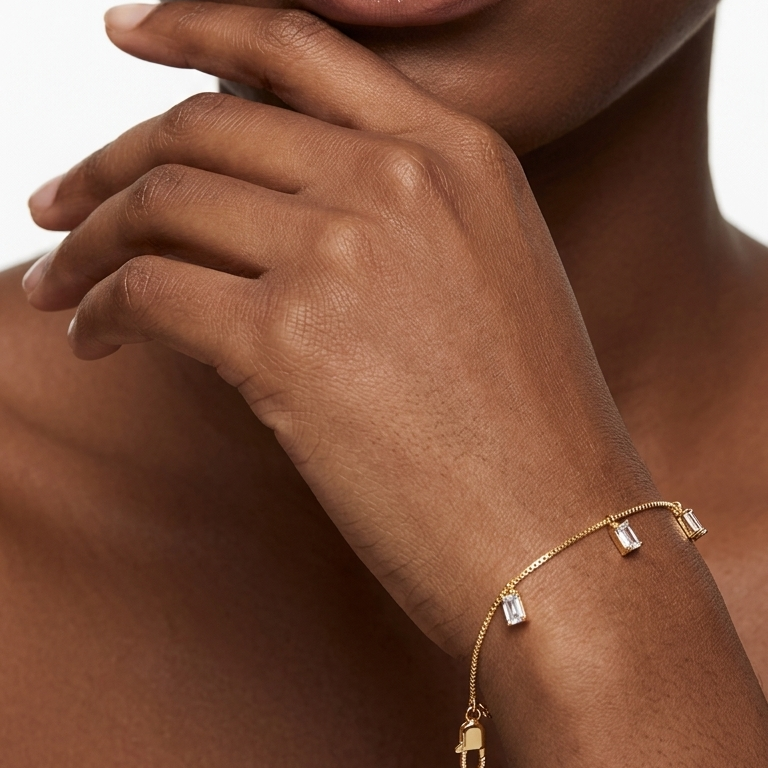
Milestone gifts (60th/75th anniversary, graduation): When gifting jewelry like a bracelet with the perfect diamond shape or necklaces to celebrate unique moments, prioritize cut quality over size. It offers brilliance in photographs and reads better than raw carat weight.
-
Engagement pieces: When buying an engagement ring emerald cut diamond or pear shape diamond, we recommend investing in cut and certification (GIA or AGS report) first. This is where quality control matters most.
-
Birthday gifts on a set budget: Here, consider lab-grown or a halo setting, which makes a smaller center stone appear larger. Within a $1,000 price a white gold customized ring with diamonds usually looks sufficient on the hand.
Caring for Your Diamond Jewelry As Newly Purchased Every Time
Diamonds are hard, not indestructible; a sharp knock at the wrong angle can still chip a girdle or loosen a prong setting. Follow these tips to clean diamond jewelry:
-
Clean pieces every few weeks with warm water, a drop of mild dish soap, and a soft-bristled brush, then rinse and pat dry with a lint-free cloth.
-
Avoid ultrasonic cleaners on pieces with fracture-filled or heavily included stones, since vibration can widen existing flaws.
-
Have prongs checked by a jeweler roughly once a year; this is the single most common way diamonds are lost, not theft or breakage.
-
Store diamond pieces separately from other jewelry in a fabric-lined box or pouch, since diamond is hard enough to scratch softer gems and even other metals sitting next to it in a drawer.
We recommend to get checked by professional jewelry cleaners for your diamond jewelry whether it's natural or lab-grown. They’re skilled at cleaning the jewelry without affecting the settings and metal tone. At home, you may damage the jewelry unintentionally during the cleaning.
Where to Buy April Birthstone Jewelry
Once you've settled on cut, clarity, and natural vs. lab-grown, buy from a source that backs its diamonds with real certification. Zemerra International offers both certified natural and lab-grown diamonds, graded by IGI and GIA, across rings, necklaces, earrings, and bracelets, custom jewelry design if you'd rather build a piece from scratch.
Zemerra International offers purchases with free insured shipping, 30-day returns, and a lifetime warranty, which covers the ongoing care outlined above. It's a solid starting point for turning April's birthstone into something you'll actually wear.
FAQs
-
What is the April birthstone?
Diamond is the official modern and traditional birthstone for April, standardized in 1912. It’s the hardest gemstone on the list with 10/10 Mohs scale hardness and available in multiple shapes and colors.
-
Does April have more than one birthstone?
Diamond is the sole official stone, though white topaz and clear quartz are sometimes marketed as budget-friendly alternatives. Also, moissanite and cubic zirconia are chosen by people as a diamond alternative.
-
What does the April birthstone symbolize?
The four qualities the April birthstone represents are eternal love, clarity, strength, and new beginnings. Also, people buy diamond jewelry as a commitment to a special one.
-
Are lab-grown diamonds a legitimate April birthstone option?
Yes. They share identical chemical and physical properties with natural diamonds and are graded using the same standards.
-
What's the most durable April birthstone alternative?
Between the common alternatives, white topaz (Mohs 8) holds up better to daily wear than clear quartz (Mohs 7), though neither matches diamond's hardness of 10.