

What Is the February Birthstone?
The February birthstone is amethyst, a purple variety of quartz. Its color can range from pale lilac to a deep, saturated violet, and it's one of the most widely used gemstones in fine custom design jewelry. You’ll find it set into rings, earrings, pendants, necklaces, and bracelets at nearly every price point.
Unlike some other months, such as August's birthstone, February's birthstone assignment isn't seriously contested. Amethyst has held the position on modern birthstone lists for over a century, and it remains the gemstone that jewelers, gemological organizations, and consumers associate with the month.
Why Is Amethyst the February Birthstone?

Birthstone traditions don't come from a single ancient source. They developed gradually, drawing on breastplate gemstone lists described in religious texts, medieval European gem lore, and centuries of shifting folk belief that assigned different stones to different months depending on the country and era.
The birthstone list most jewelers use today was standardized in the early 20th century, when American jewelry trade groups agreed on one gemstone per month to simplify a tradition that had become inconsistent across regions. Amethyst was confirmed as February's stone in that standardization and has stayed there since, by its long association with royalty, clergy, and European gem collections dating back centuries.
Amethyst's claim to February isn't just administrative, though. Its color, availability, and durability made it a natural fit for a widely worn birthstone compared to June’s Pearl, Alexandrite, and Moonstone birthstones.
Amethyst Birthstone Meaning and Symbolism
Amethyst's name comes from the Greek word amethystos, roughly translating to "not intoxicated." Ancient Greek and Roman drinkers associated the stone's wine-like color with protection from drunkenness, and wine goblets were sometimes carved from it for that reason.
Historically, the stone has also carried associations with:
-
Clarity and calm: These qualities are linked to focused, level-headed thinking.
-
Protection: A characteristic worn as an amulet in several ancient cultures.
-
Piety and wisdom: Amethyst rings were commonly worn by bishops in medieval Europe.
-
Royal status: It is favored by European royalty, including Catherine the Great, who collected amethyst jewelry extensively.
These are cultural and historical associations, not scientifically demonstrated effects. If you're drawn to amethyst for its meaning, it's best understood as a centuries-old symbolic tradition rather than a proven property of the stone itself. That’s similar to how a diamond wedding ring symbolizes commitment without physically causing it.
Amethyst is also the traditional gift for a sixth wedding anniversary, which is one reason it shows up in gifting content well beyond February birthdays.
What Color Is the February Birthstone?

"Purple" undersells the range amethyst actually comes in. The color includes:
-
Pale lavender or lilac, as it is sometimes marketed as Rose de France, a softer, more affordable option.
-
Medium violet-purple, which is the most common shade seen in mainstream jewelry.
-
Deep, saturated purple, known historically as the most prized, sometimes with reddish or bluish flashes depending on the angle and lighting.
The color comes from trace iron within the quartz crystal structure, combined with natural irradiation during formation. Because that process isn't perfectly uniform, a single rough crystal can show color zoning, streaks, or patches of different intensity. This cutters take into account when deciding how to cut the finished stone.
Darker isn't automatically better. A deep purple stone with poor clarity or a lifeless cut can look less attractive than a well-cut, evenly colored medium-tone stone. Color, clarity, and cut work together, not independently.
Amethyst and February Zodiac Signs
February contains two Western zodiac signs:
-
Aquarius - approximately January 20 to February 18
-
Pisces - approximately February 19 to March 20
Cusp dates (the day or two around the sign change) are sometimes interpreted differently depending on the specific astrological system or year, but the ranges above reflect the conventional Western zodiac calendar.
It's worth being direct about something a lot of birthstone content blurs: your zodiac sign and your birthstone come from two separate traditions. Birthstones are tied to birth month.
Zodiac stones, sometimes marketed separately as "Aquarius stones" like garnet or amber, or "Pisces stones" like aquamarine, are tied to your specific astrological sign and can differ from person to person born in the same month, depending on which system a source is using. If you were born in February, your birthstone is amethyst regardless of whether you're an Aquarius or a Pisces.
February Birthstone by Date: February 1, 10, 18, 23, and 25
Searches for specific dates February 1st birthstone, the 10th of February star sign, Feb 18 birthstone, Feb 23 birthstone, birthstone for February 25— usually come from people trying to nail down an exact answer for a specific birthday.
The birthstone answer doesn't change by date. Whether someone is born on February 1 or February 25, the birthstone is amethyst. The date only matters for the zodiac question:
-
February 1, 10, and 18 fall under Aquarius
-
February 19 through the end of the month falls under Pisces (which means February 23 and 25 are Pisces dates)
So a February 25 birthday has amethyst as its birthstone and Pisces as its zodiac sign, two different answers to two different questions, not a contradiction.
Does February Have Two Birthstones?
This is one of the more genuinely confusing corners of birthstone research, and it's worth untangling properly rather than repeating a flat "yes" or "no."
The short answer: On the modern birthstone list used by major gemological and jewelry trade organizations, February has one official birthstone: amethyst. If you see a source listing a second February stone, it's typically drawing from one of a few other, non-overlapping traditions:
-
Older or regional birthstone lists. Historical lists compiled before the modern list was standardized sometimes assigned different or additional stones to February, including onyx, bloodstone, or jasper, depending on the country and century.
-
Zodiac stones. Some content conflates a "zodiac stone" for Aquarius or Pisces with a second birthstone, even though these come from a separate system.
-
Commercially promoted alternatives. A handful of retailers list an "alternative" February stone for marketing variety, without that stone carrying the same recognition as the primary birthstone, same as the Ruby for July birth month.
None of these are wrong to mention, but they aren't equivalent to a second official birthstone. If you're buying birthstone jewelry for a February birthday and want the gemstone that's actually recognized as the month's birthstone, amethyst is the answer.
What Are the Properties of Amethyst?
Amethyst belongs to the quartz mineral family, chemically silicon dioxide (SiO₂). A few practical facts worth knowing before buying:
|
Property |
Detail |
|
Mineral |
Quartz |
|
Chemical formula |
SiO₂ (silicon dioxide) |
|
Mohs hardness |
7 |
|
Transparency |
Transparent to translucent |
|
Color cause |
Trace iron plus natural irradiation |
|
Common treatment |
Heat treatment to adjust or deepen color |
A Mohs hardness of 7 puts amethyst in a reasonably durable range for jewelry, which is harder than many gemstones, but softer than sapphire (9) or April diamond birthstone (10). In practice, that means amethyst holds up well to normal daily contact, but it can still be scratched by harder materials it comes into contact with, which matters when you're deciding how to store and wear it.
Heat treatment is the most common enhancement applied to amethyst, typically used to intensify or adjust color. It's a widely accepted, industry-standard treatment rather than something that lowers the stone's legitimacy, though reputable sellers should still disclose it when known.
How Much Is February Birthstone Amethyst Worth?
The price depends on carat weight and color category. The range remains $20 to $50 per carat weight for AAA quality (deep purple) remain costlier and pale color amethyst available at even $2/carat.
What actually determines value:
-
Color: Richer, more even violet tones generally command higher prices than very pale or brownish stones.
-
Saturation and tone: This showcases how intense and how light-or-dark the color reads.
-
Clarity: Eye-clean stones (no visible inclusions) are worth more than heavily included ones. The amethyst clarity scale is different AAAA to B, from the diamond clarity grades, like VVS or SI.
-
Cut: A well-proportioned cut that shows off color and brilliance adds value beyond the raw material.
-
Carat weight: The larger fine-quality stones, such as 5-carat stones, become disproportionately more valuable, though amethyst is available in large sizes more affordably than many gems.
-
Origin: Certain historic sources have reputational value, though this matters less for amethyst than for gems like ruby or sapphire.
-
Treatment: Untreated stones can carry a premium in specialist markets, though heat-treated amethyst is standard and widely accepted.
-
Market demand and craftsmanship: The trends and the quality of the finished piece both affect retail price.
It's also worth separating two different numbers: the price of a loose amethyst gemstone and the price of a finished piece of amethyst jewelry. The second figure includes metal cost, labor, design, and — if the piece includes accent diamonds or other stones — their cost too. Because of this, amethyst is generally considered one of the more accessible fine gemstones relative to its size and visual impact. Within $1,000, you can get an amethyst birthstone ring, pendant, necklace, and even bracelet in 14K gold.
Exact pricing depends heavily on the specific stone and design in front of you, and current figures should always be checked against a seller's live product listings rather than a generic number from an article.
Is Amethyst Good for Jewelry?
Yes, with some realistic facts based on how a piece gets worn.
Amethyst's Mohs 7 hardness and quartz family crystals make it well suited to earrings, pendants, and necklaces, which see relatively little abrasion or impact in daily wear.
Rings face more risk as hands come into contact with hard surfaces constantly, and a ring can be knocked against countertops, doorframes, or other jewelry throughout the day. Amethyst rings are still a popular and reasonable choice; they just benefit from a protective setting (such as a bezel or halo) and a little more care than an amethyst pendant would need.
February Birthstone Jewelry: What Can You Buy?

-
February birthstone earrings
Earrings are one of the lowest-maintenance ways to wear amethyst daily. Because earrings rarely face impact, even lighter-toned stones hold up well over years of wear, and studs or small drops work for both everyday use and gifting. Prefer 14KT or 18 gold metal in white or yellow tone.
-
Amethyst birthstone rings
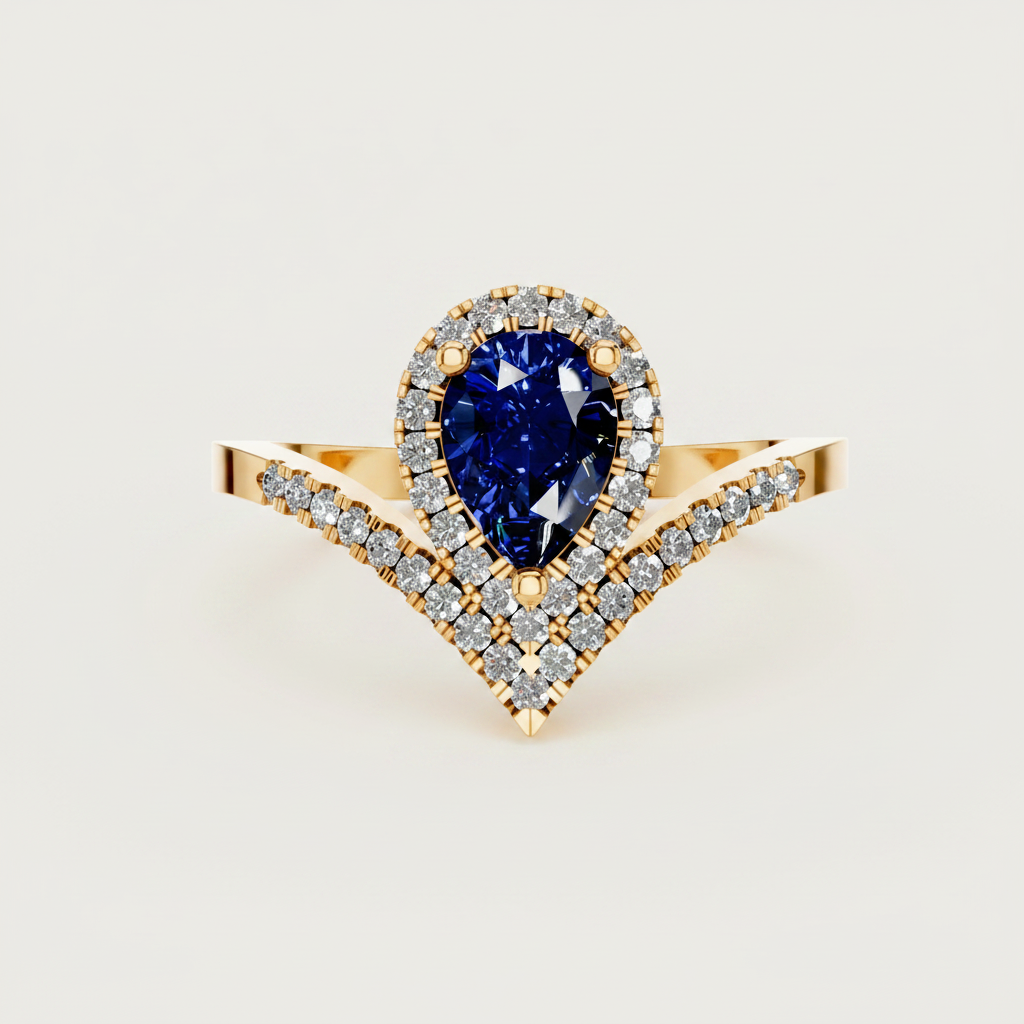
Amethyst rings range from minimalist stacking rings with a single small stone to statement cocktail rings built around a larger center gem. Anyone considering a ring for regular wear should look at the setting style as closely as the stone itself: a protective setting reduces the risk of chips or scratches over time. For a darker blue color, a sapphire gemstone 14KT gold ring with diamonds is still a good enough choice within $500.
-
Feb birthstone necklaces
February birthstone necklaces typically center on a solitaire pendant, though heart-shaped and personalized initial-plus-birthstone designs are common, especially for gifting. A pendant's chain length and setting depth are worth considering alongside the gemstone quality.
Collectors and gift-givers sometimes build out a full February birthstone jewelry set — earrings, a pendant, and a Toi et Moi unique ring in matching metal tones compared to a single piece, particularly for milestone birthdays.
How to Choose an Amethyst Birthstone Jewelry Piece
A few practical factors matter most:
-
Color preference: Amethyst birthstones’ pale lavender reads more casual and everyday; deep violet reads more formal
-
Metal tone: Amethyst’s purple pairs well with white gold, yellow gold, rose gold, and sterling silver; the choice comes down to personal style.
-
Wear frequency: Know that daily-wear pieces (especially rings) benefit from protective settings; occasional-wear pieces have more design flexibility.
-
Budget and stone size: Amethyst is available at a wide range of price points from $150 to $1,000 (with diamonds), so budget can guide carat weight and quality tier rather than ruling out a piece entirely.
-
Treatment disclosure: Ask whether the stone has been heat-treated (most amethyst has been); this is standard, not a red flag.
-
Certification: A formal gemological report is more common for large or high-value colored stones than for a modest commercial amethyst. For typical birthstone jewelry, a trustworthy seller's disclosure is usually sufficient.
-
Return and warranty terms: It is worth checking before buying, especially for gifts where sizing or preference might need adjusting after the fact.
Also, you can ask a jeweler to guide you throughout the purchase of Amethyst birthstone jewelry.
How to Care for Amethyst Jewelry
Amethyst is fairly easy to maintain with a few consistent habits:
-
Clean with mild soap, lukewarm water, and a soft brush or cloth.
-
Avoid harsh chemicals, including household cleaners and chlorine.
-
Avoid prolonged or intense heat exposure, which can affect color over time.
-
Store separately from harder gemstones (like diamonds or sapphires) to prevent surface scratching.
-
Remove rings before heavy manual work, sports, or other high-impact activities.
None of this requires special equipment. It’s closer to the care most fine jewelry needs than a gemstone-specific routine.
Which Stone Is Lucky for February?
"Lucky stone" claims come from cultural and astrological tradition, not scientific evidence. There's no gemstone with a demonstrated effect on luck, and different traditions (Western birthstone lists, zodiac gem associations, and various regional folk beliefs) don't always agree on which stone gets that label for a given month.
If you're drawn to the idea, amethyst is the stone most consistently tied to February across both birthstone and folklore traditions. But it's worth holding that as a cultural association rather than treating it as a fact.
Buy Trusted Amethyst Birthstone Jewelry from Zemerra International
Zemerra International offers a wide range of jewelry made with real and certified Febraury, Amethyst birthstone. If you need a halo ring, a solitaire pendant in 14KT gold, a tennis bracelet with the Cuban link and diamonds, or a necklace jewelry set, everything is possible. The quality and price have never been compromised at Zemerra International. Every piece at Zemerra International meets the standards and features excellent craftsmanship, so your jewelry looks new even after so many years.
Find the piece that actually feels like you.
Shop February Birthday Jewelry. Contact our jewelry expert now.
FAQ
-
What is the February birthstone?
Amethyst, a purple variety of quartz, is the official modern birthstone for February.
-
What is the February birthstone color?
Amethyst ranges from pale lilac to deep violet-purple, with color intensity varying by stone rather than following one fixed shade.
-
What is the amethyst birthstone meaning?
Amethyst has historically symbolized clarity, calm, and protection, and its name comes from a Greek word associated with guarding against intoxication.
-
What are the two birthstones for February?
On the standard modern list, February has one official birthstone — amethyst. Mentions of a "second" February stone usually come from older historical lists, zodiac stone traditions, or commercial alternatives, not a competing official designation.
-
What is the birthstone for February 25?
Amethyst is the birthstone doesn't change by date within the month. February 25 falls under the Pisces zodiac sign, which is a separate classification from the birthstone.
-
Is amethyst expensive?
Amethyst is generally one of the more affordable fine gemstones relative to its size, though price still depends on color, clarity, cut, and carat weight. Current pricing should be checked against a seller's live listings rather than a fixed figure.
-
Which stone is lucky for February?
Amethyst is the stone most commonly associated with February in folklore and cultural tradition, though "lucky stone" claims are cultural rather than scientifically supported.
-
Is the February birthstone always purple?
Yes — amethyst's defining trait is its purple color, though the specific shade ranges from pale lavender to deep violet depending on the individual stone.